1
Check everything, not just the obvious tooth
The dentist examines the lips, tongue, gums and every tooth near the impact, then takes X-rays to find root fractures, jaw fractures and teeth pushed into the bone.
Falls, sports, bike crashes and fights are the usual culprits. The injury can be anything from a chipped corner to a tooth driven up into the bone. The first hour matters most, and knowing what to do in it can save the tooth.
 1-855-219-4656
 Yes. Any tooth that is loose, pushed out of position, knocked out or broken with the pink nerve showing should be seen within hours. Call 1-855-219-4656 and describe what happened, and a same-day dentist will be ready for you. Go to the emergency room first if you lost consciousness, have a head or neck injury, cannot stop the bleeding, have trouble breathing or swallowing, or your jaw will not close properly. The dental repair can follow once you are medically clear.
Accidents that involve the mouth are frightening, and there is usually blood, which makes them look worse than they are. Teeth are surprisingly forgiving if they are handled correctly in the first hour. Bring every fragment, come as soon as you are medically safe to travel, and let the dentist decide what can be saved.
A tooth that looks fine can still be injured. A hard blow can damage the nerve or crack the root with no visible sign, and the tooth may darken or abscess weeks later. Any tooth that took a direct hit should be X-rayed, even if nothing looks wrong.
| Do | Don't |
|---|---|
| Pick up a knocked-out tooth by the crown, rinse it briefly in milk or saline, and try to place it back in the socket | Do not scrub the root, wrap the tooth in tissue or let it dry out |
| If replanting is not possible, keep the tooth in milk or tucked inside your cheek and get to a dentist fast | Do not store it in tap water. Water damages the root cells |
| Bite on gauze or a clean cloth to control bleeding and hold a loose tooth still | Do not wiggle a loose tooth or try to straighten a displaced one with your fingers |
| Save any broken fragments in milk. They can sometimes be bonded back on | Do not eat, chew or play on until you have been examined |
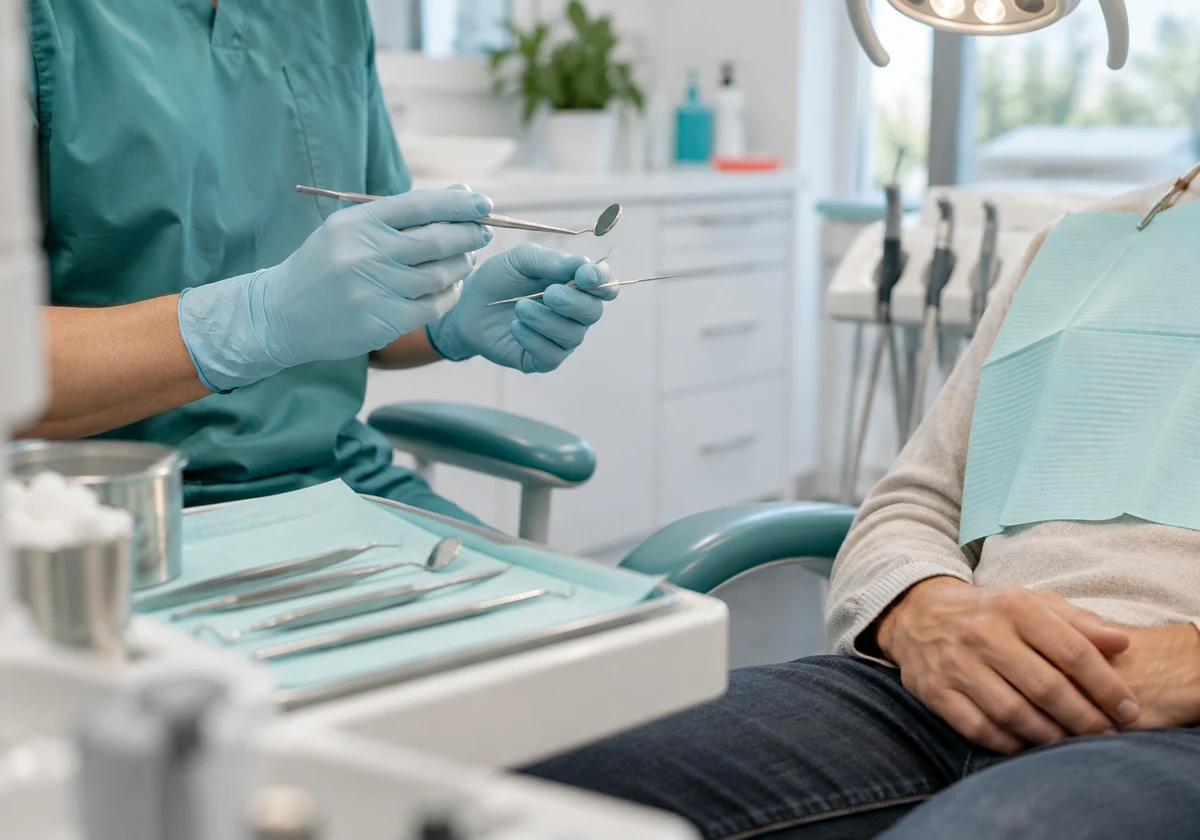
The dentist examines the lips, tongue, gums and every tooth near the impact, then takes X-rays to find root fractures, jaw fractures and teeth pushed into the bone.
Loose or displaced teeth are moved back into position and splinted to the neighbors with a thin wire and bonding for a couple of weeks. Cuts are cleaned and stitched. Broken teeth get bonding or a temporary crown.
Teeth with exposed or damaged nerves may need a root canal, sometimes at a later visit once the outcome is clearer. Follow-up X-rays over the next year make sure the roots are healing.
| Treatment | Without insurance |
|---|---|
| Emergency exam + X-rays | $100–$250 |
| Composite bonding of a chipped tooth | $150–$500 |
| Temporary crown or filling | $90–$300 |
| Root canal if the nerve is damaged | $700–$1,500 |
| Permanent crown on a badly broken tooth | $800–$2,000 |
Estimates from partner clinic fee schedules. Your dentist quotes the exact fee before treatment. See the emergency dental cost guide and the no-insurance guide.
Treatments a dentist may use: Broken tooth repair, Emergency root canal, Pediatric emergency dentist.
Need help right now? Call 1-855-219-4656, free, 24 hours a day.

Medically reviewed by Dr. FULL NAME, DDS. Last reviewed . Sources: Mayo Clinic, Broken or knocked-out tooth, ADA MouthHealthy, Dental Emergencies. Editorial policy.
Free helpline, open 24/7. We find a dentist who can treat you today.
Call 1-855-219-4656 Call now